

Will China’s Humanoid Robots Spark the Next EV-Style Boom?

In 2012, Top Gear mocked Chinese-made cars but left a prophecy: “At this rate, in five years everyone will be driving Chinese cars.” A decade later, BYD and its peers have largely fulfilled that vision—dominating the domestic market and going global. Today, a similar story may be unfolding in a very different industry. With the same supply chain muscle, policy backing, and capital surge that powered EVs, China’s humanoid robot industry is shifting from spectacle toward scale. The question is whether history is about to repeat itself.
In April this year, Beijing hosted the world’s first humanoid robot half-marathon, with 20 robot teams participating. Only six finished, with the winner clocking 2 hours, 40 minutes, and 42 seconds. By August, Chinese humanoid robots were demonstrating even more athletic capabilities: sprints, high jumps, martial arts, and soccer.
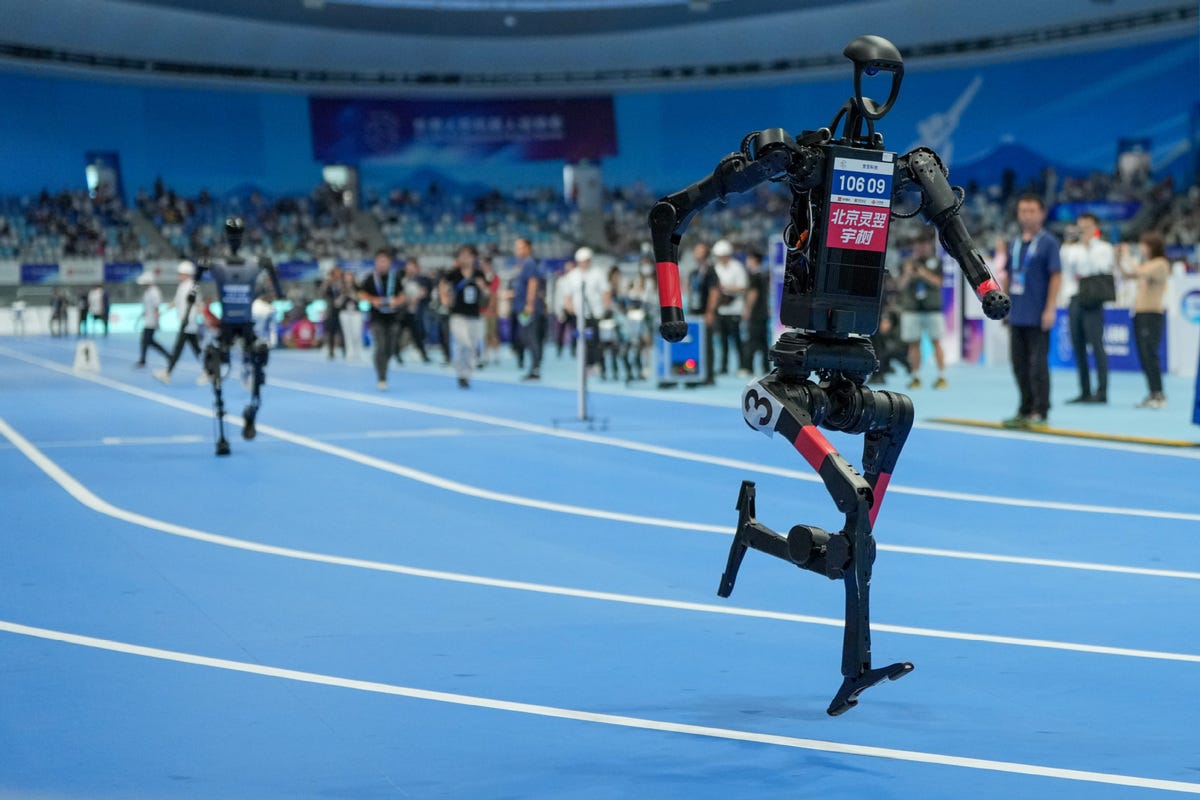
China’s capital markets have also embraced the boom. At the beginning of 2025, Unitree Robotics, a startup headquartered in Hangzhou, brought humanoid robots to China’s biggest stage—the CCTV Spring Festival Gala. Their synchronized dance with human performers went viral, propelling the once low-profile firm into the spotlight. By July, Unitree had entered IPO counseling, with a filing expected as soon as Q4 2025. Industry insiders describe this convergence of momentum as a “perfect storm.”
The “Perfect Storm” Behind the Surge
The AI Catalyst
The emergence of ChatGPT at the end of 2022 didn’t just expand imagination—it provided the missing link between advanced hardware and intelligent behavior. Large language models became the central nervous system for robot decision-making, while deep neural networks dramatically improved perception and execution. Unitree’s founder Wang Xingxing credits this moment: “ChatGPT determined that we would immediately start rebuilding humanoid robots at our company.”
The Tesla Effect
Much like China’s EV pioneers who were inspired by early Tesla ownership, Chinese robotics entrepreneurs have drawn direct inspiration from Elon Musk. Tesla’s 2021 robot announcement and 2022 Optimus prototype didn’t just showcase technology—it validated a market opportunity. As Wang put it: “Everyone should thank Elon Musk, because he established the direction and brought many things that might have remained beneath the glacier to the surface.”
Hardware Tailwinds
Over the past decade, the industrialization of EVs, industrial automation, and consumer electronics has matured China’s component supply chains. This lowered the barriers to robot-building, allowing startups to plug into existing systems rather than reinvent supply chains from scratch. Robotic arm prices, for example, have dropped from RMB 60,000–300,000 to just over RMB 10,000 today. From 2023 to 2024 alone, humanoid robot manufacturing costs fell by 40%. In July 2025, Unitree launched its third-generation R1 robot for under $6,000.
Automotive suppliers are also pivoting. In April 2024, auto-parts makers in Wuxi formed the “Humanoid Robot Core Components Industry Alliance.” Today, Wuxi’s industrial park has gathered dozens of upstream suppliers—many originally auto-parts companies now repurposed for robotics.
Who Is Manufacturing China’s Humanoid Robots?
Humanoid robots are becoming the next frontier for automotive manufacturers. This track is now crowded with traditional Chinese automakers and EV companies. Initially, companies like BYD, NIO, and Zeekr only deployed humanoid robots in their factories for simple production assistance tasks. But soon, more automakers began direct involvement, investing in in-house R&D.
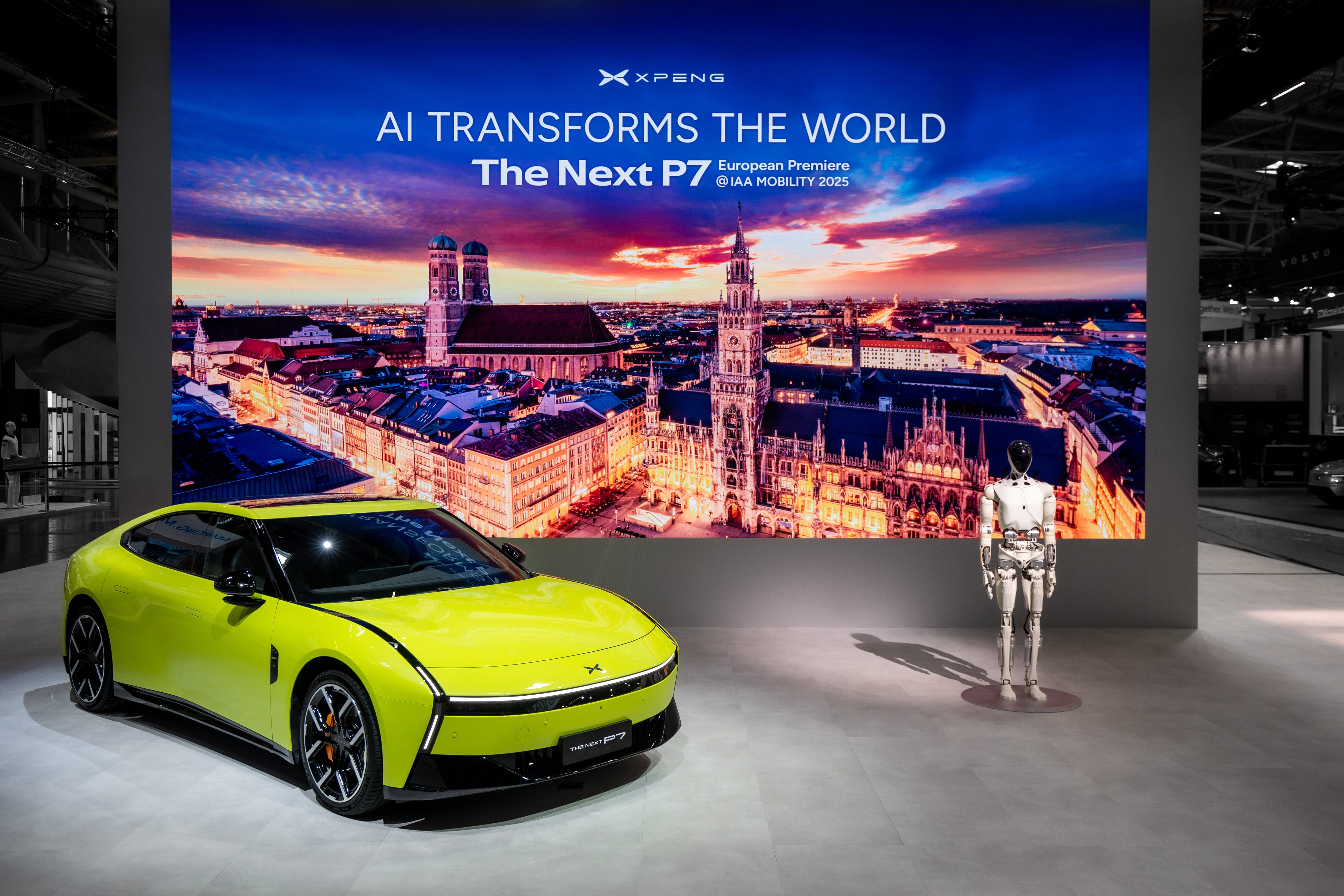
Xpeng’s founder He Xiaopeng believes the automotive and robotics industries are beginning to converge, with Xpeng targeting the launch of humanoid robots for industrial and commercial scenarios next year. Xiaomi, a phone manufacturer that recently achieved success in the EV field, released the humanoid robot CyberOne in August 2022, positioned for home care and companionship scenarios. Lei Jun admitted at the time that each unit cost 600,000-700,000 yuan, making mass production still very distant. But just two years later, the situation has subtly changed—in June 2024, Xiaomi moved its robotics team to the Yizhuang automotive factory, beginning phased deployment of CyberOne on its own production lines.
Among humanoid robot startups, several unicorn companies have emerged. Besides Unitree mentioned earlier, both Galbot and Zhiyuan Robotics are valued at over $1 billion. Galbot, now a unicorn, has piloted pharmacy robots that automate 24-hour medicine dispensing across Beijing stores, with nationwide rollout planned.
What Role Does the Government Play?
Li Feng, founding partner of FreesFund, notes that China’s humanoid robot drive reflects not just market logic but national strategy. Like EVs, its growth is fueled by more than consumer demand—it addresses structural challenges. With China’s aging demographics and labor shortages looming, humanoid robots are framed as a solution to service-sector gaps.
This year’s government work report mentioned “embodied intelligence” for the first time. Local governments have since announced funds totaling RMB 187 billion for robotics-related industries. Cities like Beijing, Shanghai, Shenzhen, and Suzhou have each launched funds exceeding RMB 10 billion. The precedent is clear: Hefei’s early EV bets helped secure factories and jobs, earning it the nickname “an investment bank disguised as a city.” Few local governments want to miss a similar robotics opportunity.

Beyond the Hype
For all the momentum, humanoid robots remain far from everyday deployment. Hardware has advanced, but embodied intelligence still lags, dexterous hands remain unsolved, and costs are far above mass-market thresholds.
As Wang Xingxing notes, robot hardware is “completely adequate,” but embodied intelligence large models remain “insufficient.” Scaling laws that drove LLM progress don’t neatly apply to embodied AI. A Caixin interviewee observed that many “working robots” in factories still rely mostly on older automation, with only limited embodied AI. “It’s like a plate of green pepper and pork,” he said—80% traditional tech, 20% new.
Investors dream of an EV-style curve: sales jumping from 1 million to 10 million units in five years. But most analysts don’t expect that before 2030. Which raises the question: if China’s manufacturing engine keeps accelerating, will the next decade bring not just cheaper robots, but a global industry shift as profound as EVs?